
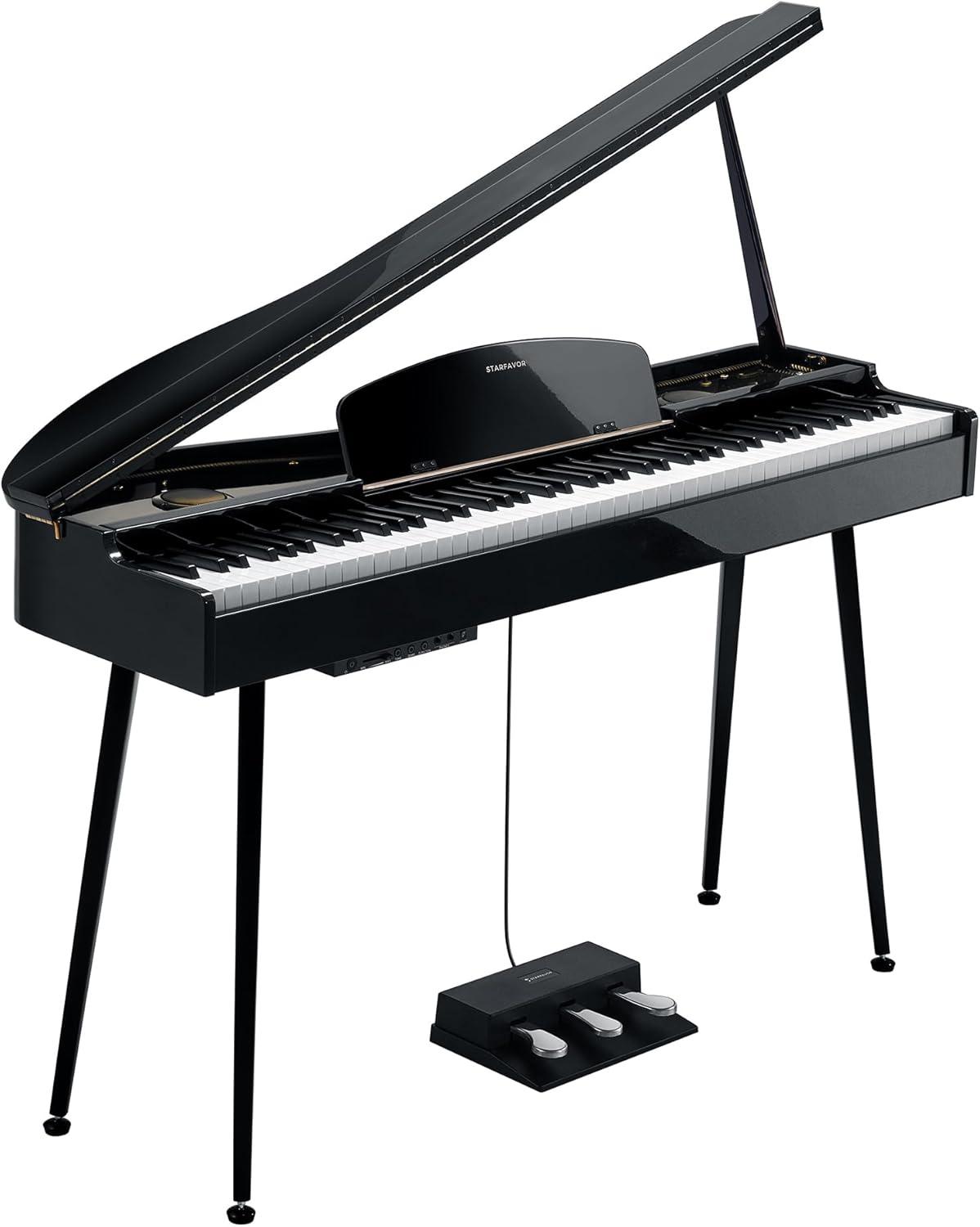
When the starfavor REVERIE Grand arrived, we expected a full-size instrument with the footprint of a practice keyboard – and that first impression stuck. Its 1:1 replica lid, arched soundboard and black lacquer finish give it the silhouette of a miniature grand, yet it only claims about 5 sq. ft. of real estate. The amber light inside the cabinet casts a warm glow that made our living room feel more like a small recital hall the moment we powered it on.
We spent time with the REVERIE playing scales, accompaniments and a few familiar pieces to get a feel for the weighted hammer action across all 88 keys.We listened for the advertised “music hall” reverb as we opened and closed the lid, compared the character of the five built-in timbres, and pushed the 25W bi-amplified speaker system (two full-range drivers plus two tweeters) to see how it handled dynamics. We also explored the practical side: Bluetooth streaming, USB‑MIDI connectivity, the dual keyboard mode for teaching, metronome/transposition functions, demo songs and the dual-headphone output for quite practice.
In this review we’ll walk through touch, tone, build and connectivity, highlight where the REVERIE shines, and point out the trade-offs you should consider if you’re thinking of it as a beginner’s instrument or a compact home centerpiece. If you want a sense of whether this “grand yet compact” piano really delivers a convincing acoustic experience and useful modern features, read on – we’ve put it through its paces.
Our Overview and First Impressions of the starfavor REVERIE Grand Digital Piano
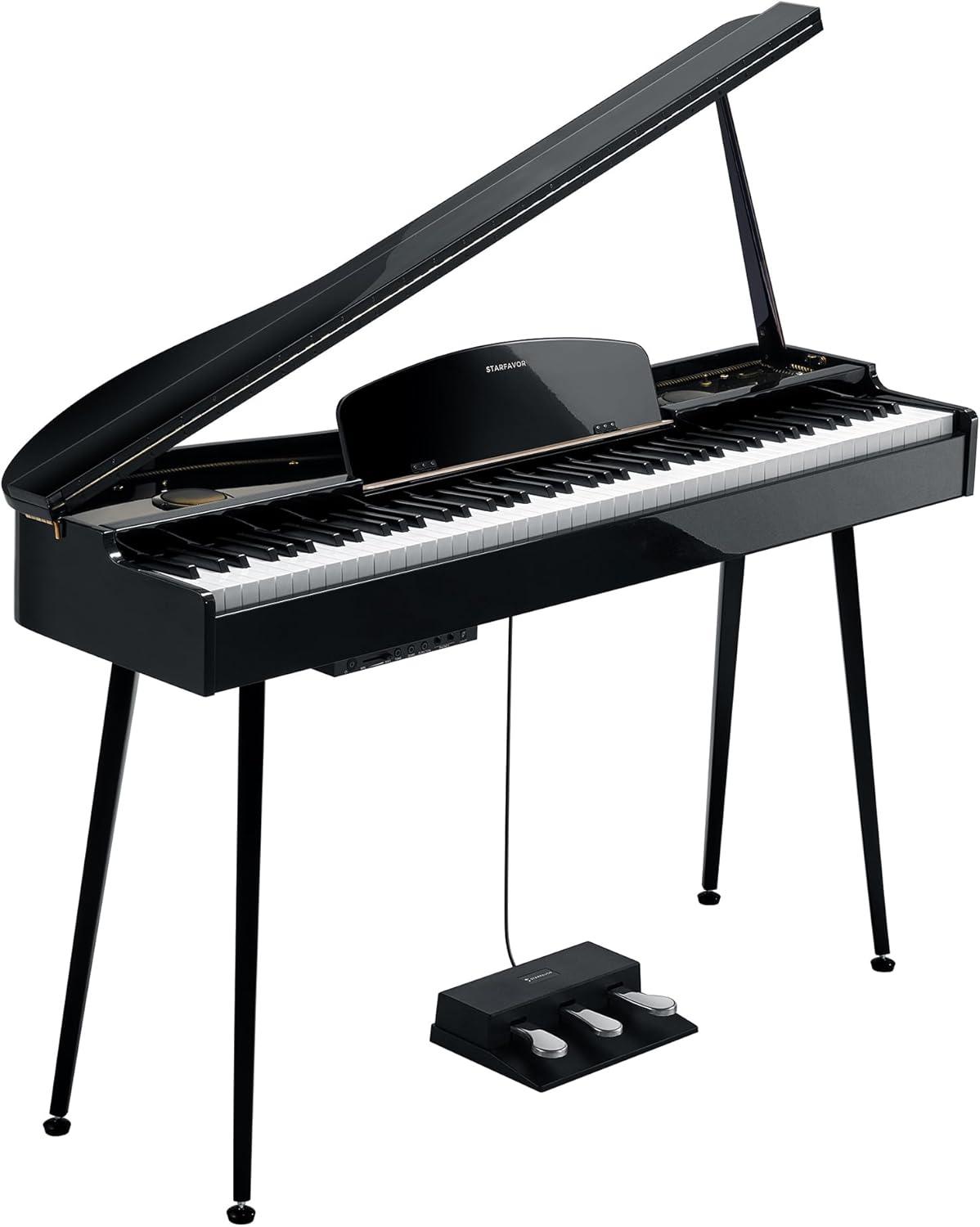
Our first impressions center on the authentic touch and thoughtful design. The weighted 88-key action really does emulate an acoustic piano’s resistance, giving us immediate confidence that finger strength and expression translate well from practice to performance. The 1:1 lid mechanism and arched soundboard lend a surprisingly grand feel while keeping the footprint compact (about 5 sqft) – the glossy black lacquer finish and warm amber light strip turn this into a tasteful piece of home décor as much as an instrument. Built-in practice aids like transposition, a metronome, five timbres and five demo songs, plus a dual-keyboard mode for teacher/student use, mean the basics for learning are already onboard without adding complexity.
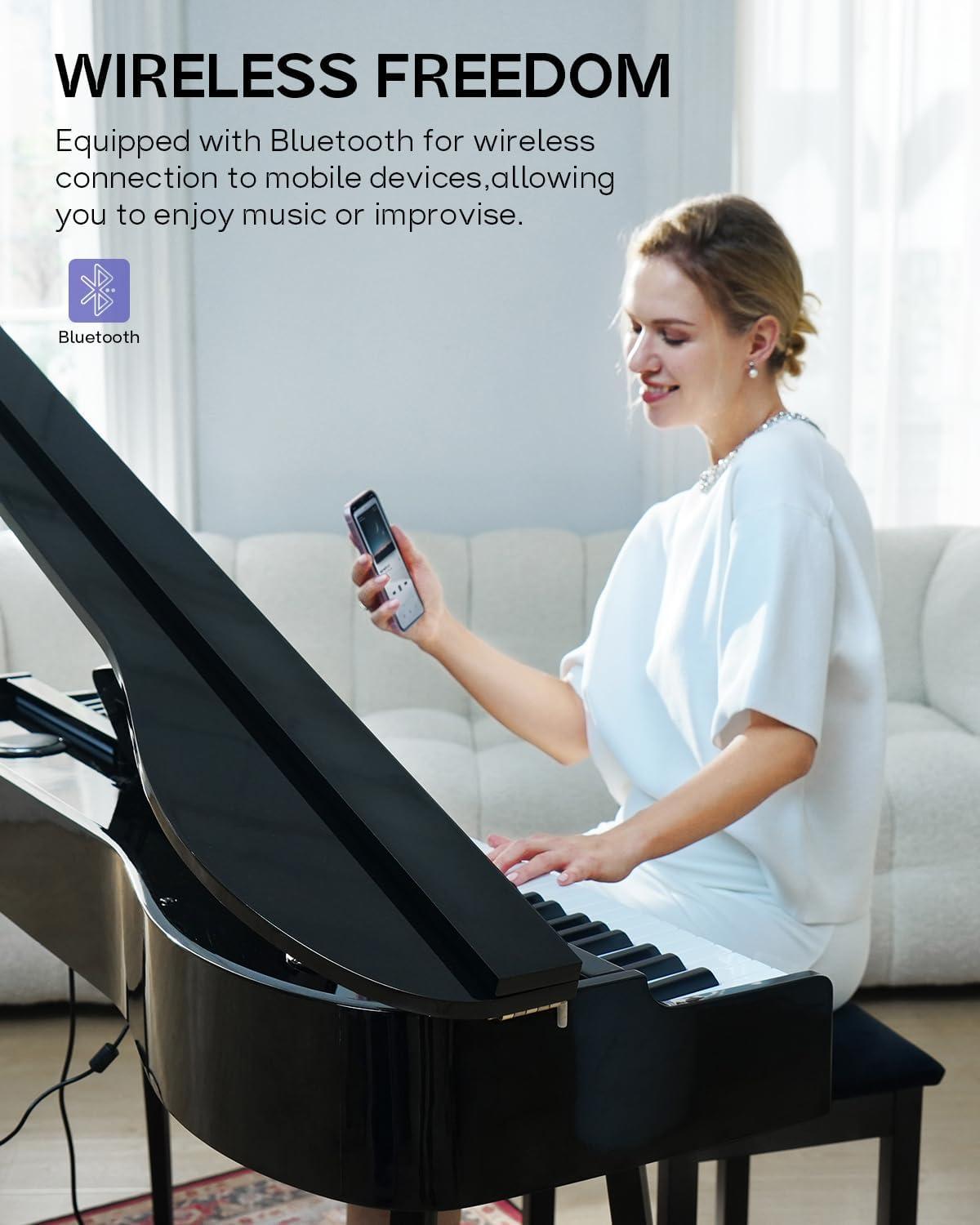
Sonically the unit impressed us: a bi-amplified 25W system with two full-range drivers and two tweeters delivers clarity, resonant harmonics and a convincing “music hall” reverb that changes with the lid position. Wireless Bluetooth streaming and USB‑MIDI connectivity make it easy to pair with apps and DAWs for lessons or creative editing, while dual headphone output supports private practice or duet sessions. Speedy highlights we noticed include:
- Expressive weighted keys that respond to dynamic playing
- Rich,spacious tone from the multi-driver speaker setup
- Modern connectivity via Bluetooth and USB‑MIDI
| Feature | At a glance |
|---|---|
| Keys | 88 weighted,hammer action |
| Power | Bi-amplified 25W |
| Speakers | 2 full-range + 2 tweeters |
| Connectivity | Bluetooth,USB‑MIDI |
Check current price & reviews on Amazon
Our Feature Highlights from Weighted Hammer action to Bluetooth and USB MIDI Connectivity
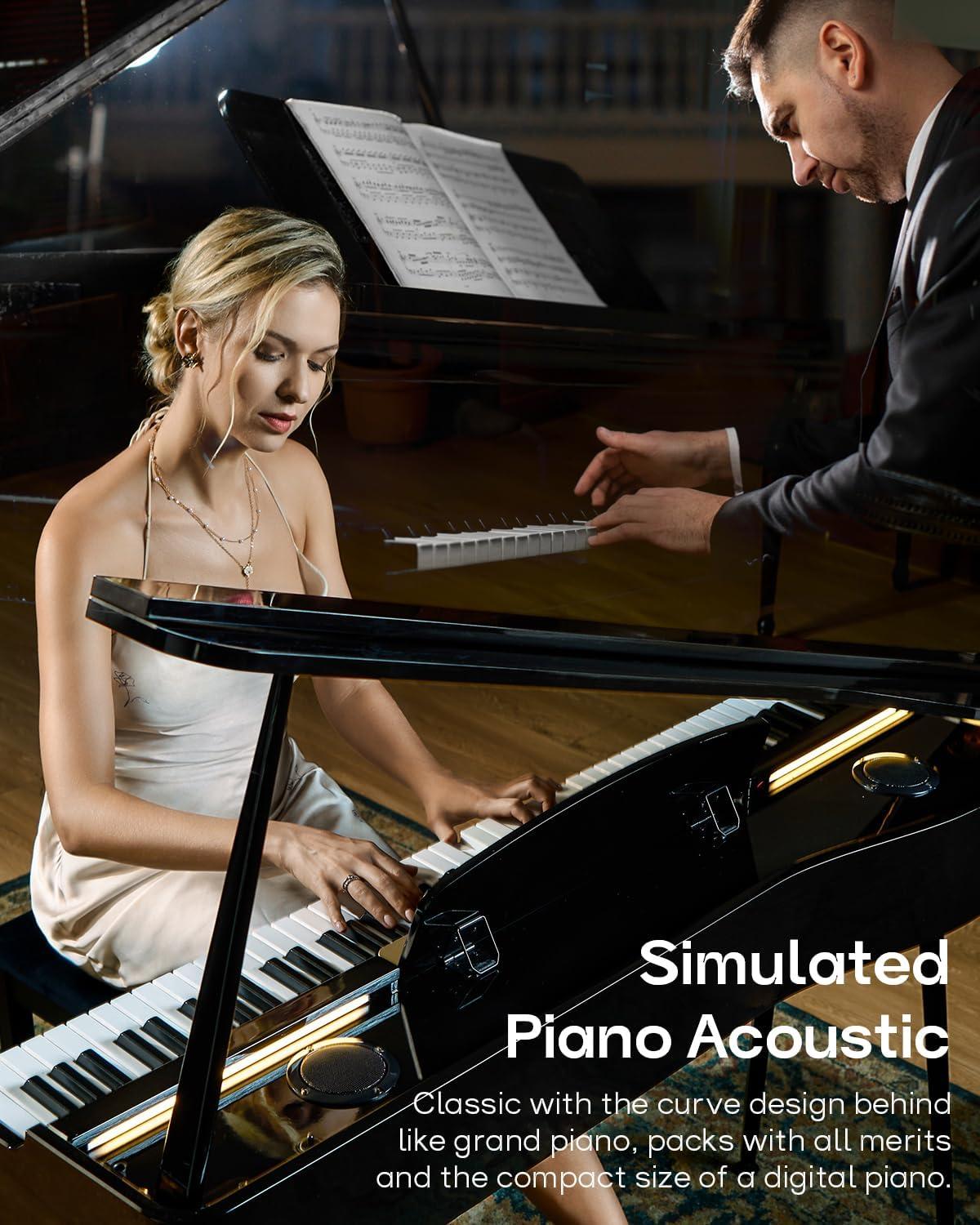
We were promptly struck by the convincing weighted hammer action that gives each of the 88 keys a realistic, graded response-perfect for developing proper finger technique. The instrument also packs a tidy suite of practice aids and tones that make learning enjoyable:
- 5 high‑quality timbres for quick tone changes
- 5 demo songs to inspire practice
- Transposition and a built‑in metronome for flexible study
- Dual‑keyboard setup ideal for teacher‑student sessions
All of this lives beneath a glossy, concert‑inspired lid that mimics the movement of a grand-so while the footprint stays compact, the touch feels decidedly grand.
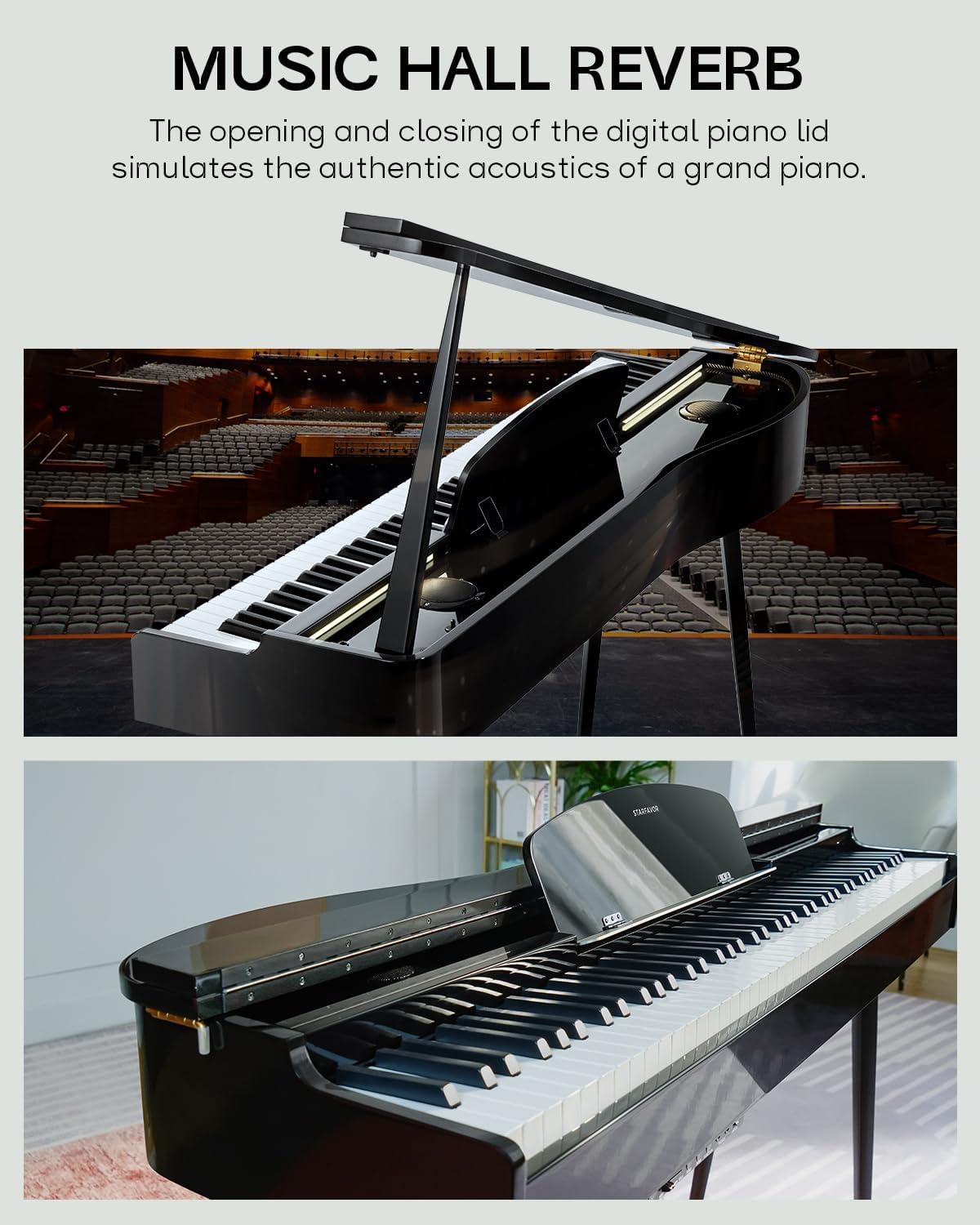
Our listening tests confirmed the benefit of the music‑hall reverb and the bi‑amplified 25W sound stage: two full‑range speakers plus two tweeters deliver clarity and presence, while an amber internal light strip adds a warm atmosphere for late‑night practice. Wireless and studio workflows are covered too-Bluetooth for streaming and a USB‑MIDI port for connecting to apps or daws-plus a dual headphone output for private duet work. Below is a quick spec snapshot we found useful:
| Feature | Quick Note |
|---|---|
| Keys | 88, weighted hammer |
| Power | Bi‑amped 25W |
| Speakers | 2 full‑range + 2 tweeters |
| Connectivity | Bluetooth + USB‑MIDI |
| Extras | Amber light, dual headphone mode |
Our In Depth playthrough, Sound Evaluation and Practical Recommendations for Home Practice and Beginners
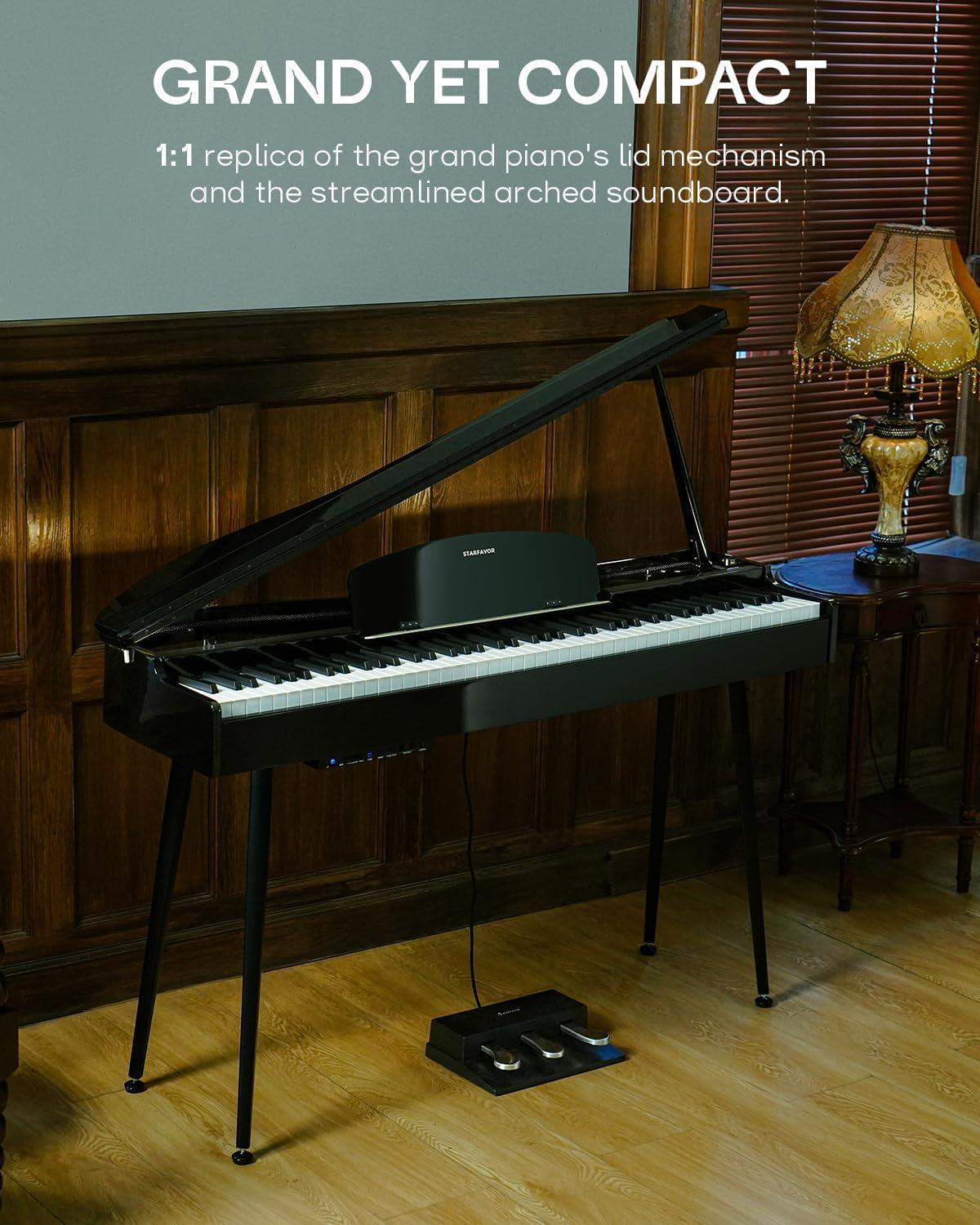
During our in-depth playthrough we found the 88-key weighted action to be the standout – the keys respond with a convincing grand-piano touch, giving dynamics and finger strength a realistic translation. The built-in Music Hall reverb (adjustable via the lid) noticeably deepens sustain and resonance, so opening the lid creates a warmer, more concert-like tone while closing it tightens articulation for practice. The bi-amplified 25W speaker array (two full-range drivers plus two tweeters) projects a clear, rounded sound that brings out string overtones without sounding thin, and the amber internal lighting adds a calming ambience for late-night sessions. Practical connectivity like Bluetooth and USB‑MIDI made pairing to apps and DAWs painless, and dual-headphone mode let us practice privately or collaborate without losing tonal detail. Key observations from our session included:
- Realistic weighted feel: responsive and consistent across the range
- Dynamic reverb: lid position meaningfully alters character
- Speaker clarity: full but not overpowering in small rooms
- Wireless & MIDI: straightforward for apps and recording
- Minor quirk: some presets reset on restart, so double‑check settings
For home practice and beginners we recommend using the dual-keyboard setup for teacher-student drills and leaning on the metronome and transposition features to build timing and repertoire versatility. Start with the five timbres and demo songs to explore tone colors, then pair the instrument via Bluetooth to backing tracks or a learning app for fun, contextual practice sessions; when neighbors are sleeping, headphones preserve the full tonal detail while keeping volume civil. Below is a quick suitability snapshot we put together from our testing:
| Use Case | Why it effectively works | Quick Verdict |
|---|---|---|
| Beginner Lessons | weighted action + dual mode aids technique | Highly Recommended |
| Home Practice | Compact footprint, strong speakers, headphones | Excellent |
| Recording/Apps | USB‑MIDI + Bluetooth make integration easy | Very Suitable |
Pros & Cons

Pros & Cons
We like to keep things simple: what shines, and what might give you pause. Below is our quick snapshot followed by a few short notes on each point.
| Pros | Cons |
|---|---|
| Authentic weighted 88-key action | Only five built-in timbres |
| Music-hall reverb via adjustable lid | presets reset on restart (per manufacturer note) |
| Bi‑amplified 25W, 4‑speaker system for richer tone | 25W may struggle in large rooms |
| Bluetooth + USB‑MIDI for apps and recording | Bluetooth latency can affect live play (typical for manny devices) |
| Elegant grand-style design and amber interior lighting | Compact footprint (~5 sq ft) still requires floor space |
Pros – what we enjoyed
- Realistic touch: The weighted 88 keys and hammer-action feel give us a convincing grand-piano sensation that’s great for building proper technique.
- Expressive reverb: The lid mechanism isn’t just for looks – changing it alters the tonal character and adds a nice “music hall” ambience.
- Full, clear sound: The bi‑amplified 25W system with two full-range drivers and two tweeters provides a pleasantly full soundstage for home use.
- Modern connectivity: Bluetooth for backing tracks and USB‑MIDI for DAWs or learning apps make integrating the REVERIE into our workflow easy.
- Designed for the home: The compact grand silhouette,black lacquer finish and warm amber strip produce a refined look – it doubles as décor as well as an instrument.
- Practice-friendly features: Dual-headphone mode, metronome, transposition and a dual-keyboard setup are handy for lessons and quiet practice sessions.
cons – what we noticed
- Limited onboard voices: With just five timbres and five demo songs,the onboard sound palette is focused rather than vast - we may still rely on apps or synths for variety.
- Preset behavior: The product note that preset sound effects can vary between lid states and default settings reset upon restart is inconvenient if you like a one-time setup.
- Power vs. space: The 25W system sounds great in a room, but it’s not meant to fill a large hall – expect studio/home-level volume and presence.
- Bluetooth caveat: Wireless convenience is great for playback, but Bluetooth can introduce slight latency when playing along live – a wired USB‑MIDI connection is more reliable for low-latency work.
- Still a piece of furniture: Even though compact for a “grand” style,it occupies roughly 5 sq ft and needs a stable spot – small apartments will need to plan placement.
We find the REVERIE Grand compelling for home players and beginners who want a convincing acoustic-like touch, elegant design, and modern connectivity. If you require large-room projection, a huge bank of onboard sounds, or completely persistent presets, it may not be a perfect fit.
Q&A
Q: What are the standout features of the REVERIE Grand we noticed?
A: The obvious ones are the full 88-key weighted hammer action, the music-hall style lid that alters reverb, Bluetooth and USB‑MIDI connectivity, a bi-amplified 25 W 4‑speaker system, and that warm internal amber light. It also includes 5 timbres, 5 demo songs, metronome, transposition and a dual-keyboard mode for teaching.
Q: How does the key action feel? Is it realistic for beginners and beyond?
A: The weighted hammer action does a solid job of simulating an acoustic touch – heavier in the low end,lighter in the treble – which makes it suitable for beginners learning proper technique and satisfying enough for intermediate players. It’s not a high-end graded action like premium boutique pianos, but for the price and category it feels authentic and responsive.
Q: How do the speakers and overall sound hold up?
A: The 25 W bi-amplified system (two full-range speakers + two tweeters) gives clear, full-bodied tones with notable string resonance. The “German S grand” inspiration is audible in the voicing: warm and rich for home use. For critical studio work we’d still reach for headphones or direct USB‑MIDI into a DAW with higher‑quality samples, but for practicing, playing for guests, or small home performances it’s extraordinary.
Q: What does the lid/reverb feature actually do?
A: The lid mimics the acoustics of a real grand: opening it increases perceived resonance and brightness, closing it tames the tone. It’s a tactile way to shape the sound and can make practicing feel more like being at a piano. Note: some preset sound effects change depending on lid state, and the unit resets some defaults when restarted – so we recommend checking settings after power cycles.
Q: How reliable/useful is the Bluetooth and USB‑MIDI?
A: Bluetooth is convenient for streaming backing tracks or playing along with apps and phone music. USB‑MIDI lets you connect to music software and learning apps; we found it easy to use.be aware Bluetooth audio can introduce some latency for real‑time performance – fine for accompaniments, less ideal for latency‑sensitive monitoring.
Q: Is the REVERIE Grand a good option for teachers and students?
A: Yes – the dual-keyboard (dual mode) is a thoughtful feature for lessons, letting teacher and student share the keyboard range simultaneously.the weighted keys and metronome also support solid foundational practice. Pair it with a quality pair of headphones and it works well in shared living spaces.
Q: How big is it and will it fit in a typical home?
A: It’s designed to be “grand yet compact.” The product claims about 5 sq ft of footprint and an elegant arched soundboard, so it’s smaller than a full acoustic grand but styled to look like one. It’s a good fit for living rooms, apartments, and dedicated hobby corners where space is limited but design matters.
Q: Does it come with pedals,bench,or other accessories?
A: The product description doesn’t list included accessories. We recommend checking the retailer page or asking the seller directly for what’s in the box. In any case, most players will want to consider a full sustain pedal (or three‑pedal unit if available), a comfortable bench, and a good set of headphones.
Q: How about the ambient lighting – is it useful or just for looks?
A: The amber light strip is primarily aesthetic and creates a cozy, performance‑like vibe. It doesn’t affect tone, but it does make the instrument feel like a centerpiece in a room. For late-night practice it’s a pleasant touch.
Q: Are there any notable limitations or things to watch for?
A: A few: the onboard voices and sample depth won’t rival professional stage pianos; Bluetooth audio latency can be an issue for precise live monitoring; some preset effects revert on restart, so you may need to reapply personal settings. Also, for technical details like exact pedal inputs, weight, or warranty length, consult the official spec sheet or seller listing before purchase.
Q: Who is this piano best suited for?
A: We think it’s ideal for beginners, students, home hobbyists, and anyone who wants a stylish, compact instrument with a convincing weighted action and good onboard sound. It’s also a strong choice for teachers who value the dual‑keyboard mode and for players who want wireless connectivity for practice with apps.
Q: Should we use external speakers or headphones for better sound?
A: For near‑field listening and practice, the built‑in speakers are very good. For recording, critical listening, or playing for larger audiences, we’d use external monitors or a DAW with high‑quality piano samples via USB‑MIDI. Headphones are recommended for late‑night practice and to bypass room acoustics entirely.
Q: How easy is setup and daily use?
A: Setup is straightforward: minimal assembly is required, and daily operation is intuitive. We suggest keeping the manual handy for connectivity and reverb/lid behaviors. Regular maintenance is simple – dust the case, wipe keys with a slightly damp cloth, and avoid extreme humidity.
Q: Is it a good value for the price?
A: Considering the full 88 weighted keys, multimode connectivity (Bluetooth + USB‑MIDI), 25 W speaker system, and the unique lid/reverb and ambient lighting, we see it as a strong value for home players who want a visually striking instrument with authentic feel. If you need studio‑grade samples or pro stage durability, you may want to compare with higher-priced options.
Q: Any final tips if we’re buying or testing one in person?
A: Play scales and dynamic passages to assess the key action and velocity response. Try different lid positions and listen for tonal changes. Test Bluetooth with your preferred apps and check USB‑MIDI compatibility with your DAW. And if possible, try the dual‑keyboard mode with a partner – it’s a neat feature for lessons.
Elevate Your Lifestyle
We’ve enjoyed taking the REVERIE Grand for a proper spin – from its authentic weighted 88-key action to the warm amber glow that turns a late-night practice session into something cinematic. Its compact grand-inspired design, dual-keyboard teaching mode, and bi-amplified 25W speaker system give it real presence in a small space, while Bluetooth and USB‑MIDI open up practical possibilities for learning and recording.The music-hall reverb and multiple timbres add expressive layers, even if the preset behavior (and occasional resets) remind us this is a digital instrument with its own quirks.
All told, we see the REVERIE Grand as a compelling option for beginners and home players who want a full 88-key, weighted experience without the footprint of a traditional grand. It offers thoughtful features for teachers, hobbyists, and anyone who values both sound quality and aesthetics. If you’re chasing the feel and atmosphere of a larger piano while keeping things cozy at home, this one deserves a close look.
If you have questions about our testing or want us to compare the REVERIE Grand to other models, leave a comment and we’ll dig deeper. Ready to take the next step? Explore the REVERIE Grand on Amazon and see current specs, pricing, and reviews.
Reviews
There are no reviews yet.